
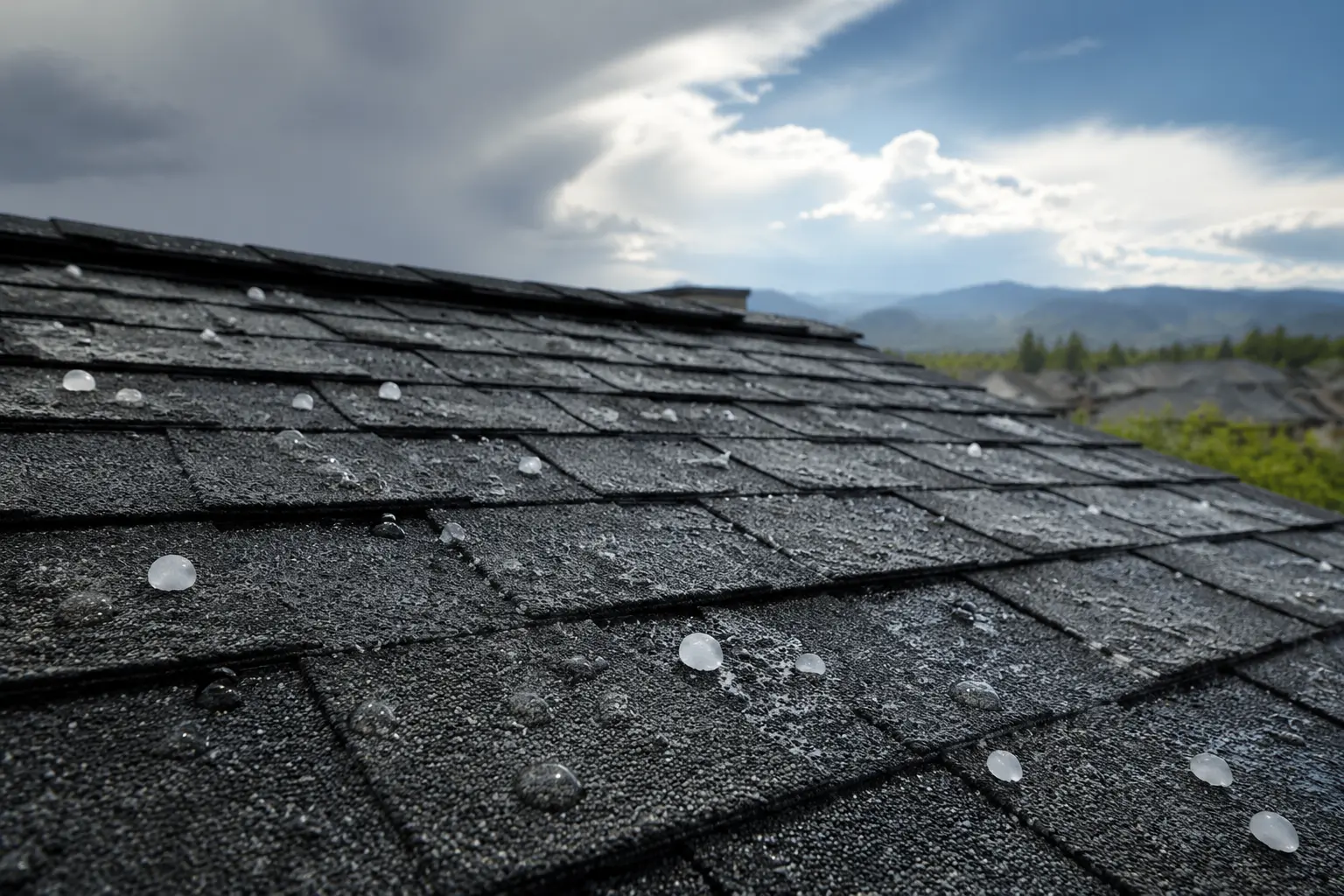
After a Front Range hailstorm, homeowners are often flooded with door knocks, urgent promises, and conflicting advice. The best first move is usually not signing a contract. It is protecting people and property, documenting what happened, and getting reliable information about the roof.
1. Start with safety and active leaks
Stay off wet or damaged roofing. Look from the ground for displaced materials, hanging gutters, broken skylights, tree damage, or obvious openings. Inside, check ceilings, attic areas, walls, and fixtures for water. If water is entering the home, contact a qualified local contractor for temporary protection and document the condition before emergency work begins.
2. Document the storm and visible conditions
- Record the date and approximate time of the storm.
- Photograph hail beside a ruler or familiar object when safe.
- Photograph gutters, downspouts, screens, siding, fences, vehicles, and outdoor equipment.
- Save weather alerts, repair receipts, and contractor reports.
- Do not discard damaged personal property before asking your insurer about documentation.
3. Schedule a thorough local inspection
A useful hail inspection covers more than shingles. The inspector should evaluate roof slopes, ridge and hip caps, vents, pipe jacks, flashing, skylights, gutters, downspouts, siding, windows, paint, and other collateral surfaces. Ask for photographs and a clear explanation of functional versus cosmetic observations.
Avoid anyone who promises claim approval before your insurer evaluates coverage or pressures you to sign over decision-making immediately.
4. Review your policy and contact your insurer
Check your wind-and-hail deductible, roof settlement terms, endorsements, reporting duties, and time limits. Your licensed agent or carrier should explain policy language. A roofer can document construction conditions and repair scope but should not present themselves as the person deciding coverage.
When an adjuster inspects, provide your documentation and ask your contractor whether attending would help identify construction details or overlooked damage.
5. Compare the approved scope with the real project
Insurance estimates and contractor proposals often organize work differently. Compare quantities, material type, ventilation, flashing, code-required items, permits, taxes, overhead, and any damaged exterior components. Ask questions about gaps before work starts.
Do not choose a contractor only because the contract total matches the insurer's first estimate. Choose based on complete scope, qualifications, communication, workmanship, and accountability.
Red flags after a storm
- Pressure to sign before you understand the document
- Promises to waive or absorb your deductible without a lawful, documented basis
- No clear local address, insurance, references, or manufacturer credentials
- Large upfront payment without defined materials, schedule, and protections
- Claims that every roof in the neighborhood is automatically damaged